4 hr
MUSA Underwater Museum & Manchones Reef Snorkel Adventure
- Entry ticket
- Mobile voucher
- Valid same day
- Free cancellation
MUSA Underwater Museum — Snorkel Tours Among 500 Submerged Sculptures
Drift past silent figures anchored in coral, where art meets the living reef
Compare fares, pick the fit — all bookings are mobile-voucher and eligible for free cancellation where shown.
4 hr
6 hr
3 hr
Selecting the right cancun snorkeling tour at musa the underwater museum requires choosing between a dedicated shallow-water art gallery experience or a combined reef-and-museum exploration. Visitors should consider these official tour categories to ensure their excursion matches their skill level and interest in marine life.
| Snorkel Classic Punta Nizuc Only |
Top pick MUSA & Reef Combo Museum & Manchones Reef |
|
|---|---|---|
| Depth | 4 meters | 4 to 8 meters |
| Primary Focus | Art sculptures | Art and coral reef |
| Duration | ~3 hours | ~4 to 5 hours |
| Included Gear | Mask, snorkel, fins | Mask, snorkel, fins, vest |
| Best for | Budget-conscious visitors | First-timers seeking variety |
| See tickets & prices |
Verdict: For the best overall value, we recommend the MUSA & Reef Combo as it provides a comprehensive look at the underwater landmarks.
Worth it for art lovers and snorkelers
A Cancun snorkeling tour at MUSA the underwater museum delivers something genuinely unique: over 500 life-sized sculptures submerged 3-10 meters beneath the Caribbean, functioning as both art installation and artificial reef. The 15 USD marine park fee covers site access, though commercial tours bundling gear, guides, and boat transport typically run 50-85 USD depending on whether you're hitting MUSA alone or combining it with Manchones Reef and other sites. The sculptures—ranging from human figures to a Volkswagen Beetle—accumulate coral and attract schools of tropical fish, creating a gallery that shifts with every visit. Visibility peaks in morning light, and the shallow depth makes this accessible even for weak swimmers. It's worth it if underwater sculpture appeals to you or you want reef snorkeling with a conceptual twist. Skip it if you're chasing pure coral biodiversity or already snorkeling Cozumel's deeper reefs—MUSA's value lies in the art-meets-ecology concept, not fish density alone.
Bottom line: Book a cancun snorkeling tour at musa the underwater museum if art installations beneath the waves intrigue you—it's the Caribbean's only submerged sculpture park and worth the marine fee for that novelty alone.
The cancun snorkeling tour at musa the underwater museum is best for those seeking unique art, while natural reef tours offer more diverse marine life; most visitors conclude that combining both provides the most complete experience.
|
Top pick MUSA Underwater Museum |
Natural Reef Snorkeling | |
|---|---|---|
| Key Attraction | Submerged Art Sculptures | |
| Marine Biodiversity | Moderate (Artificial Reef) | |
| Environment Type | Artificial / Protected Site | |
| Optimal Depth | 26–33 feet (8–10 m) | |
| Ideal For | Art enthusiasts & photography | |
| Visitor Intent | Sightseeing & unique culture | |
| Accessibility | Beginner-friendly boat tour | |
| Price | 15 USD Marine Park fee (plus tour cost) | |
| Booking Constraints | Must use authorized tour operator | |
| See tickets & prices |
Verdict: Choose the cancun snorkeling tour at musa the underwater museum for a surreal encounter with artistic landmarks, or opt for a natural reef experience if your priority is spotting a wider variety of colorful sea life and coral density.
Hand-picked experiences loved by thousands of travelers
3.5 - 4.5 hours
Free Cancellation
Dive into three incredible underwater sites including a sunken sculpture museum and vibrant coral reefs
5 hours
Free Cancellation
Beginner-friendly scuba experience exploring submerged sculptures and vibrant Caribbean reefs
4 hours
Free Cancellation
Dive into an aquatic art gallery where sculptures double as thriving coral reefs in Cancún's turquoise waters
4 hours
Free Cancellation
Swim through coral reefs, underwater art, a shipwreck, and cenote pools on this Caribbean snorkeling tour
7 hours
Free Cancellation
Full-day Caribbean sailing experience with snorkeling, open bar, beach time, and lunch included
4.5 hours
Free Cancellation
Explore submerged sculptures and vibrant coral reefs on two dives at Cancún's famous underwater art gallery
5 hours
Free Cancellation
Exclusive reef exploration with your own boat, guide, and flexible schedule on the Mesoamerican Barrier Reef
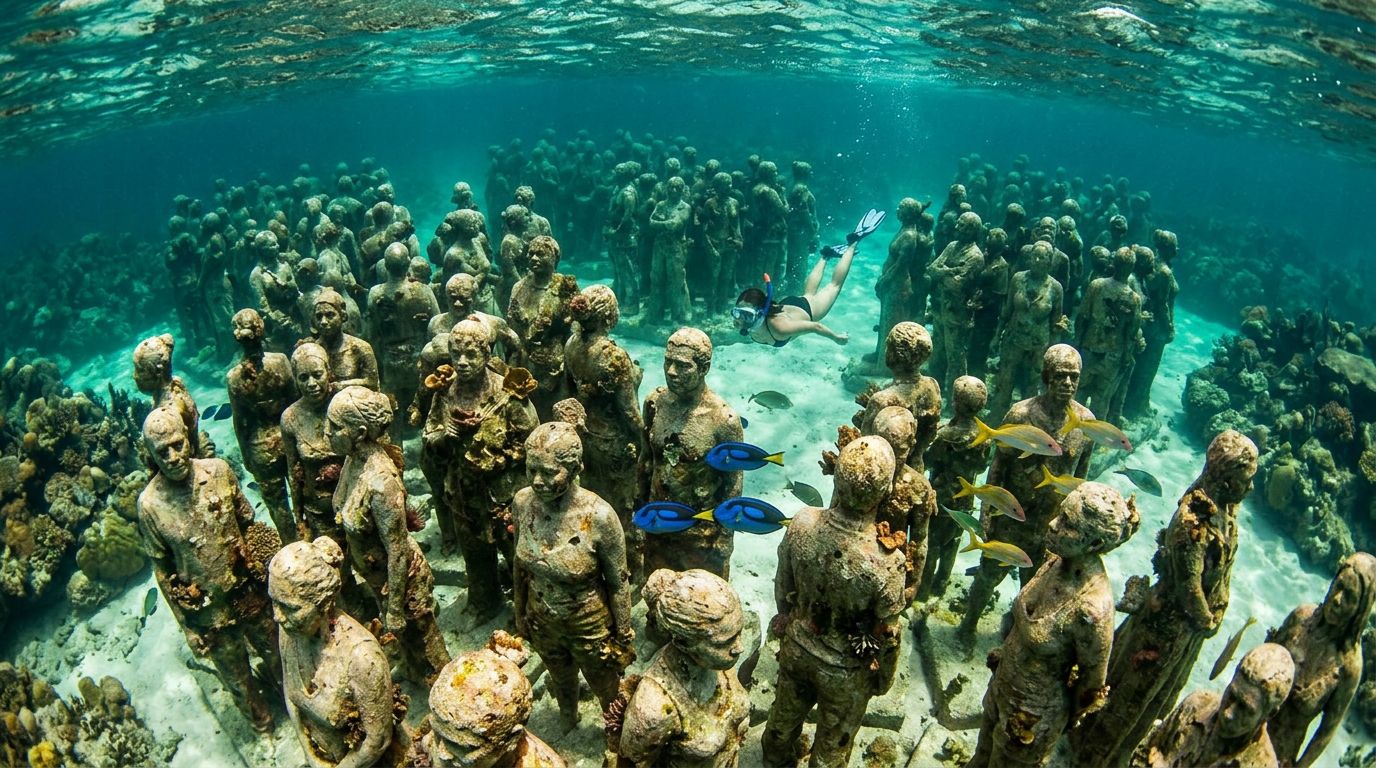
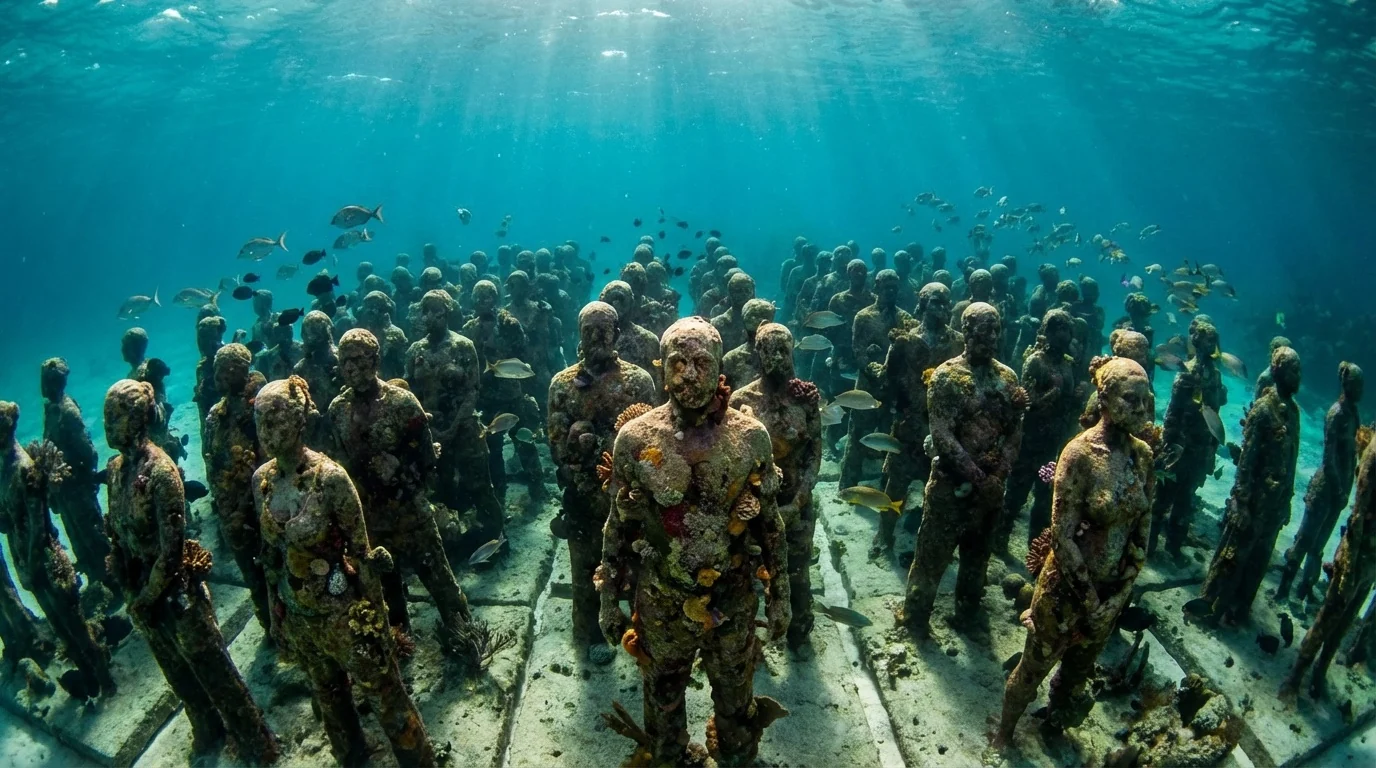
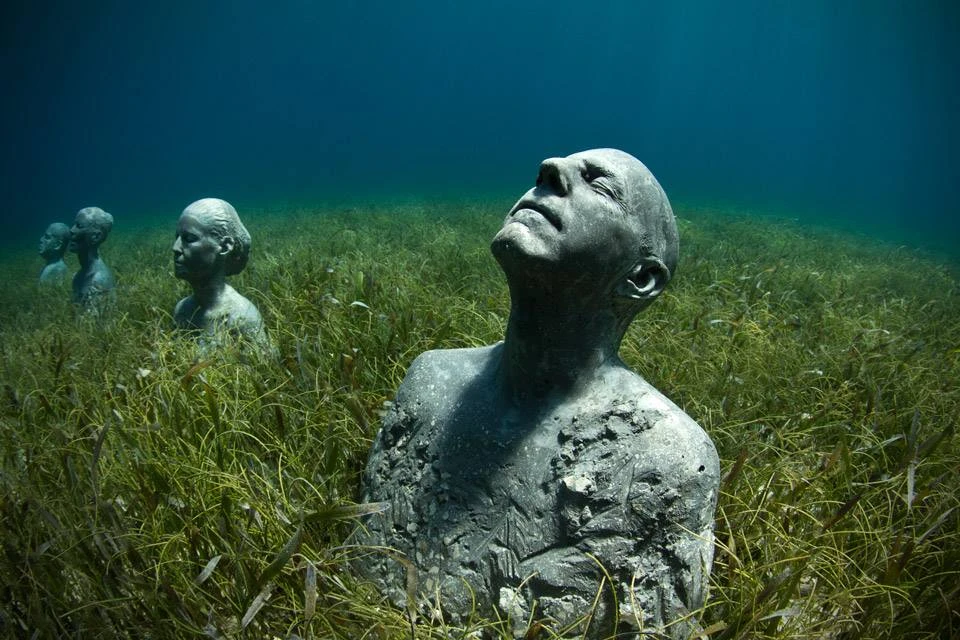
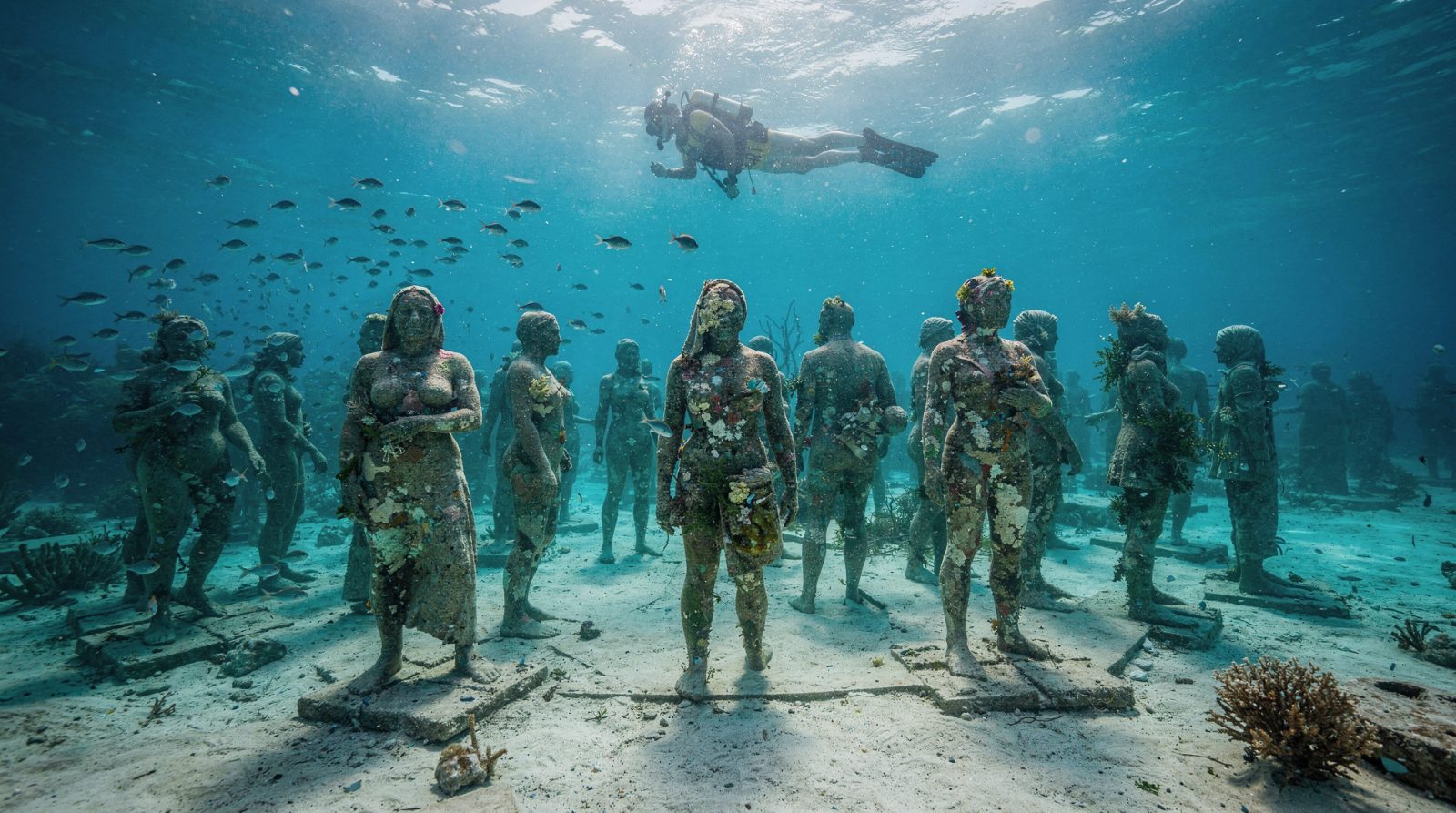
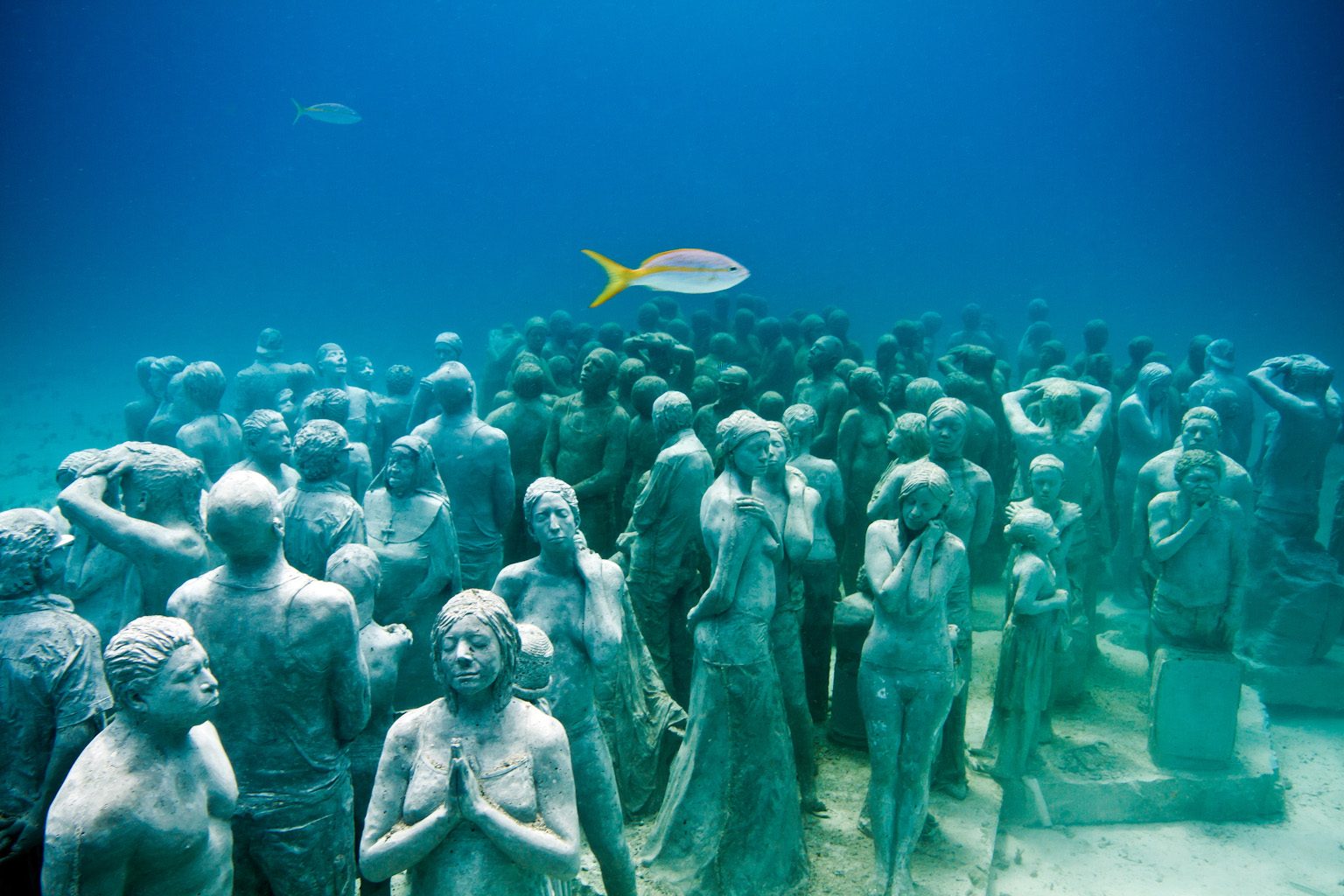
This massive installation features over 450 life-sized statues cast from real local people standing in defense of the sea. It serves as the cornerstone of the Manchones gallery and is a primary feature of any cancun snorkeling tour at musa the underwater museum.
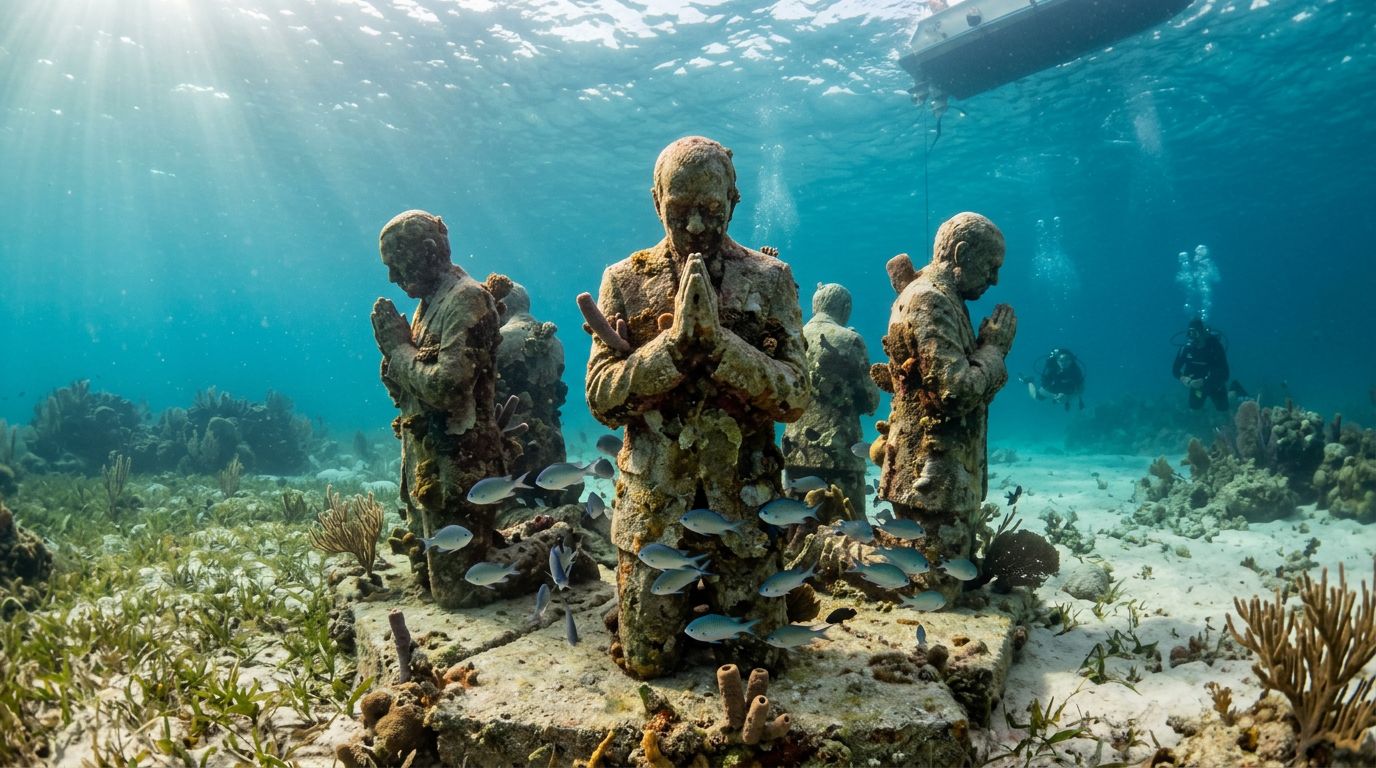
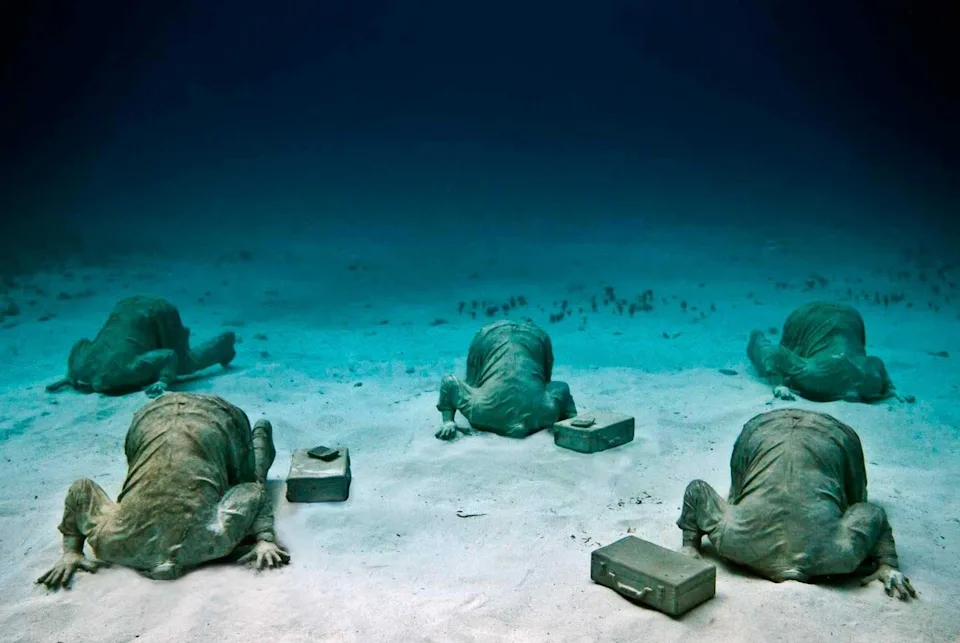
These figures are shown in prayer positions, symbolizing how society often prioritizes short-term gains over long-term environmental health. It is a striking sight found during a cancun snorkeling tour at musa the underwater museum.
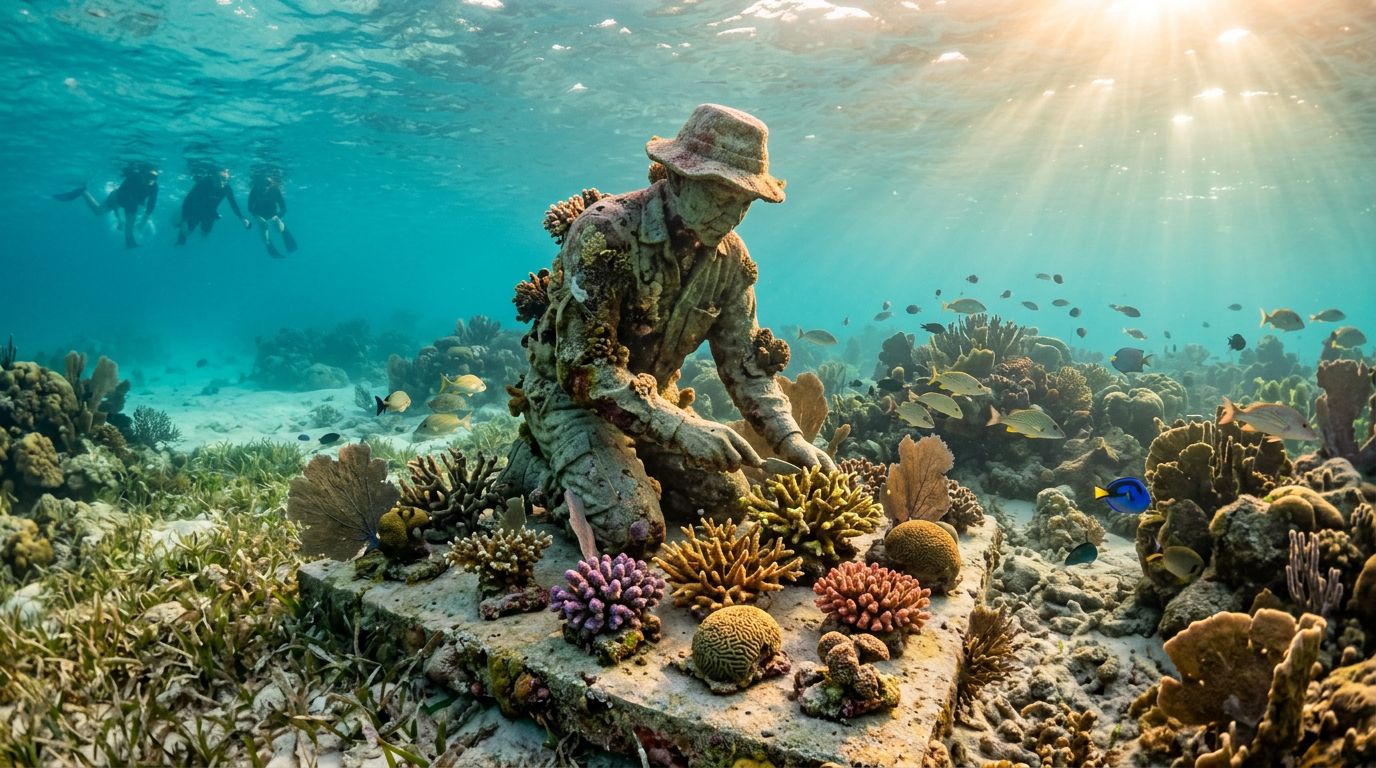
Located in the shallower Punta Nizuc area, this statue portrays a person tending to a coral garden, illustrating the mission of the MUSA. It is a frequent highlight for those on a cancun snorkeling tour at musa the underwater museum.
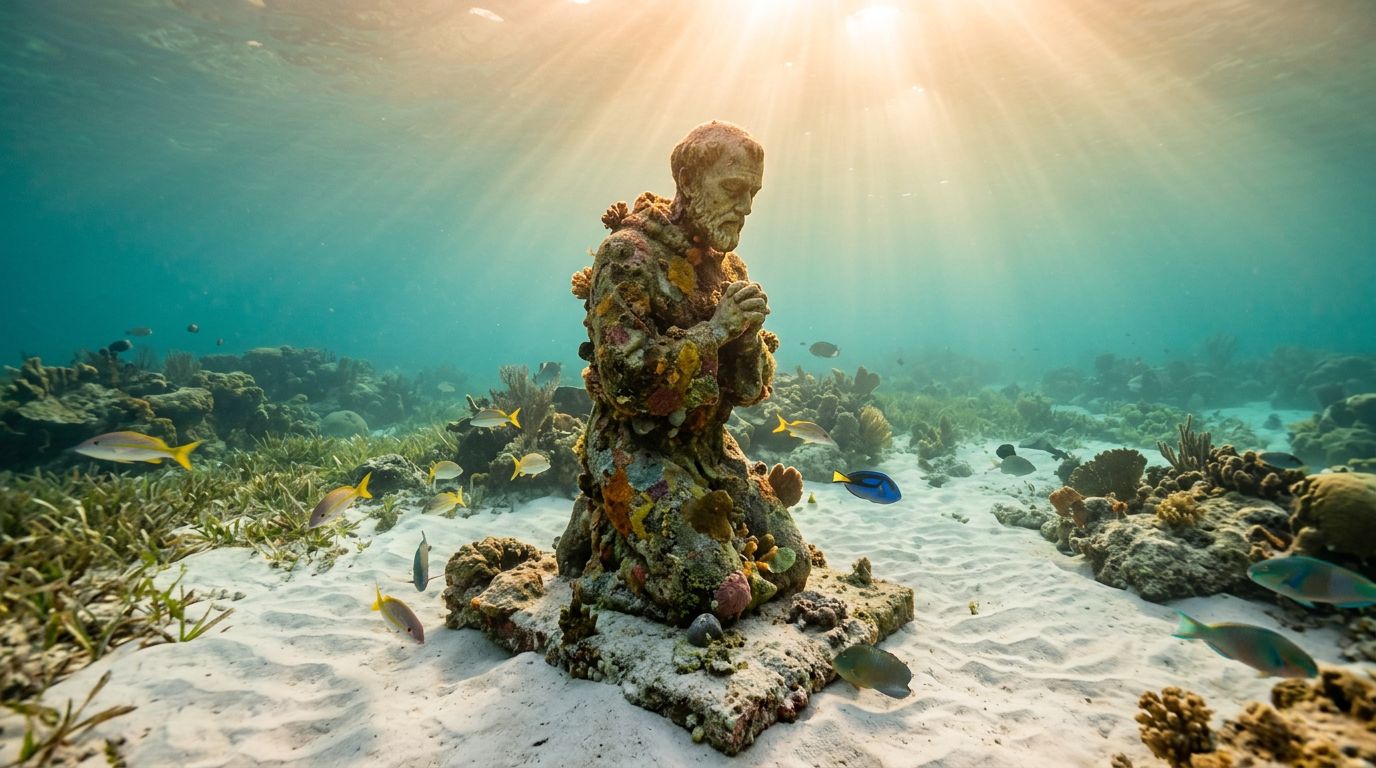
A solitary figure often visited during the shallower excursions, representing the spiritual connection between humans and the ocean ecosystem. It is an iconic landmark on a cancun snorkeling tour at musa the underwater museum.
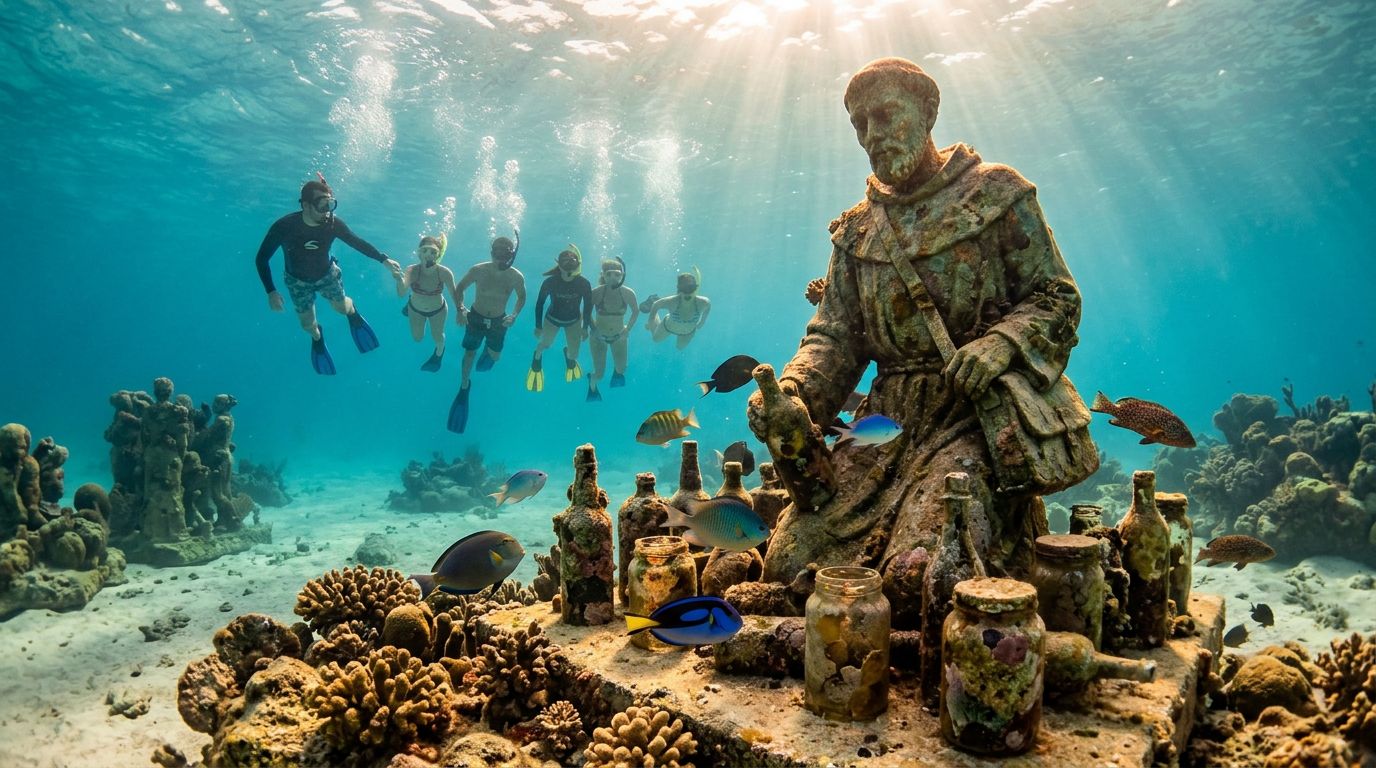
This piece features a figure surrounded by jars representing lost dreams, emphasizing the museum's role as a vessel for marine life restoration. It is often seen on a guided cancun snorkeling tour at musa the underwater museum.
All the details about your upcoming adventure in one place
British sculptor Jason deCaires Taylor sank his first concrete figures off Isla Mujeres in 2009, anchoring 403 life-sized human forms to the seabed at depths between four and eight meters.
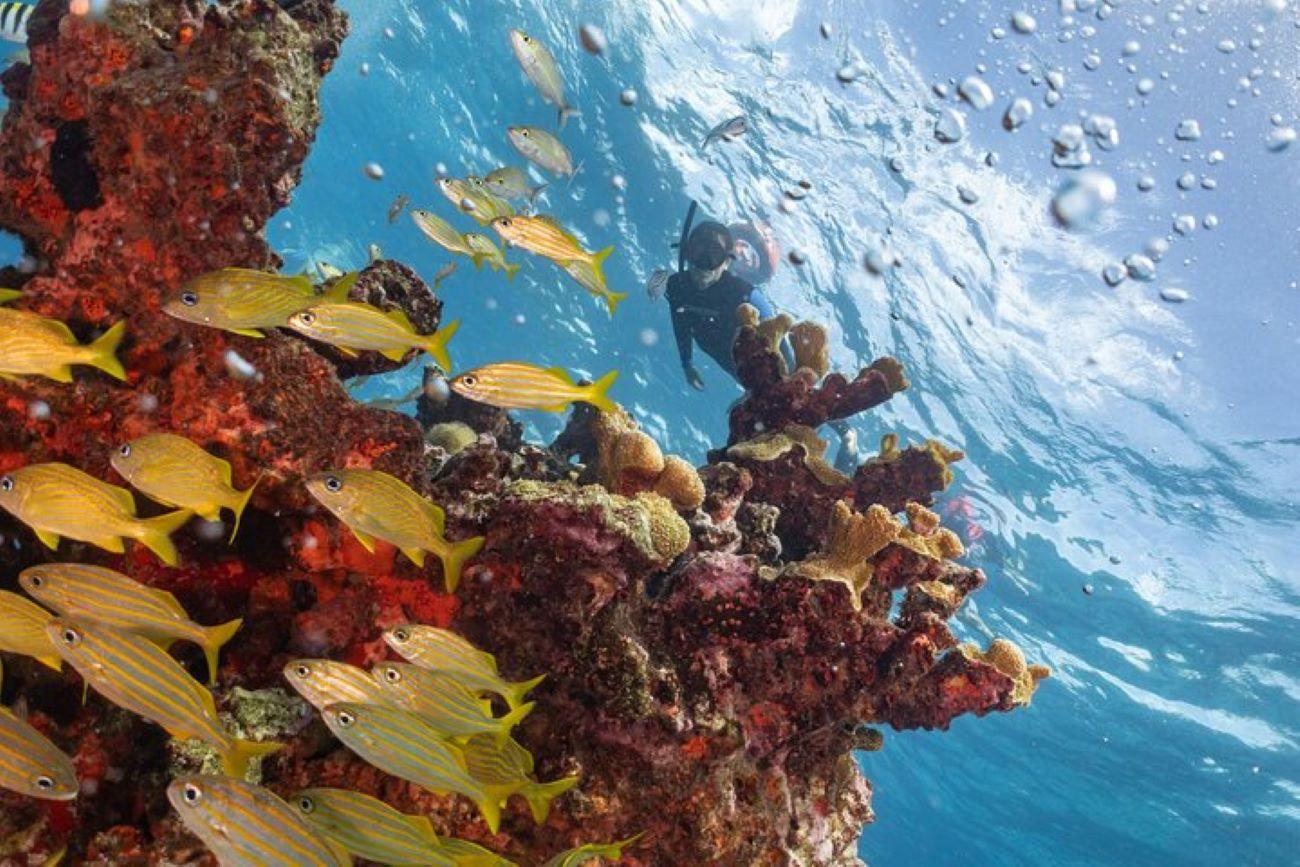
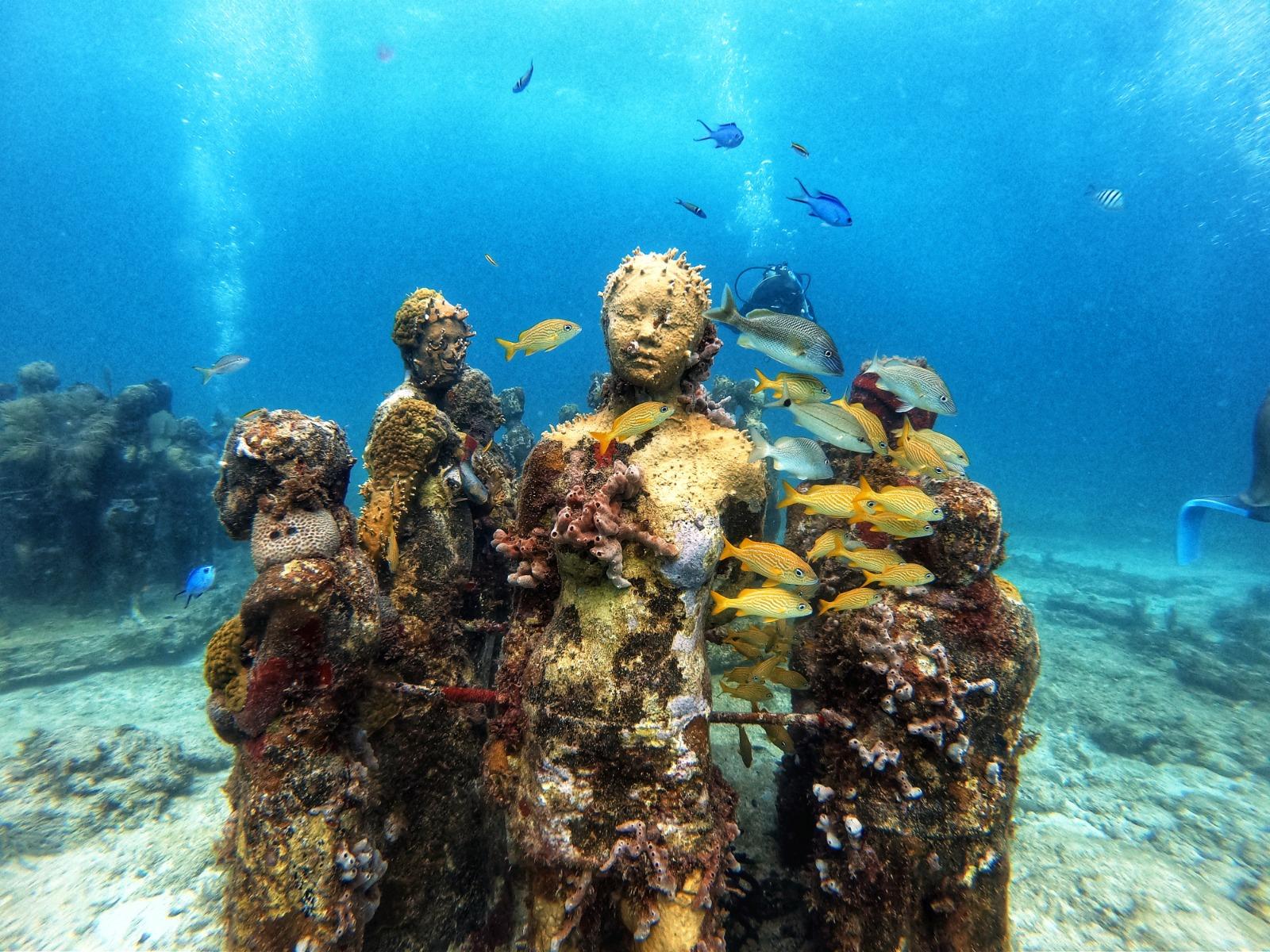
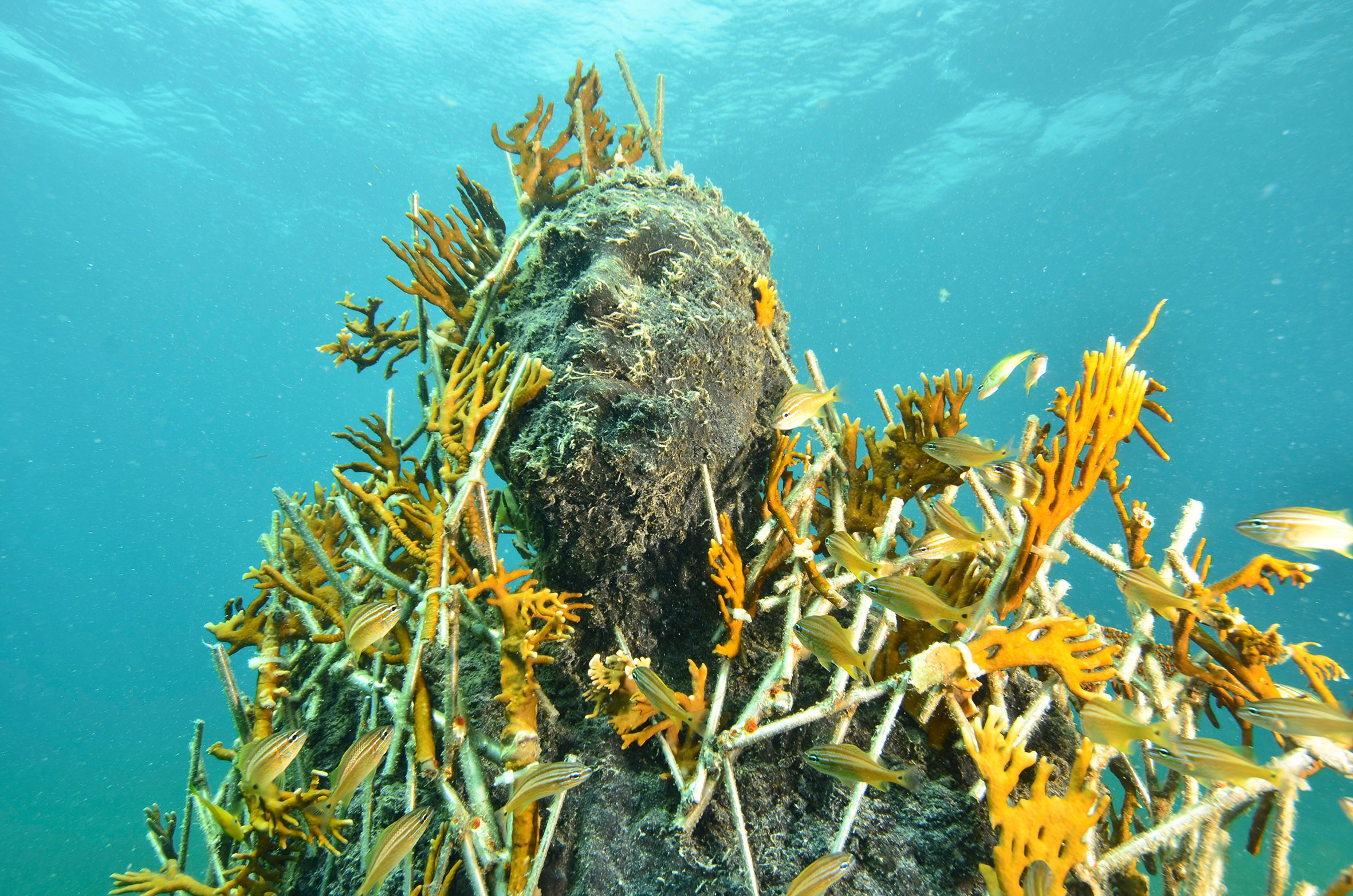
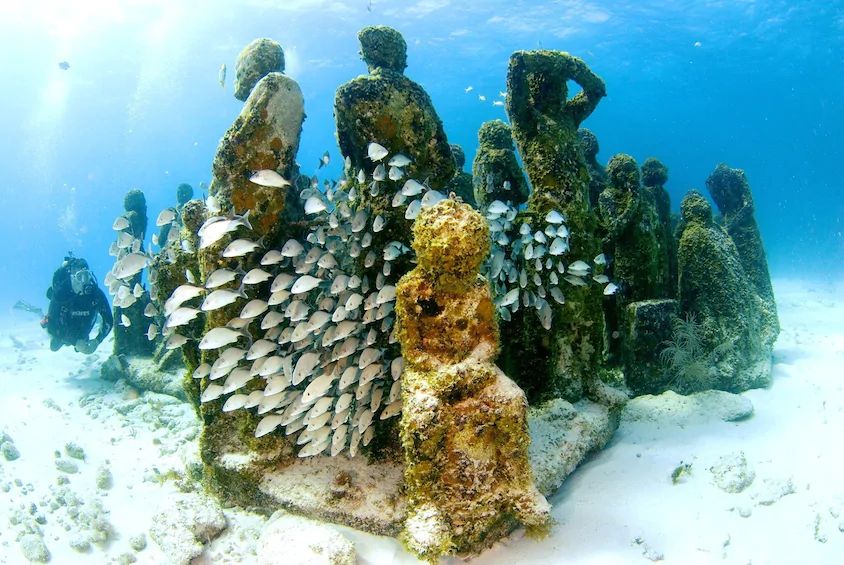
The Museo Subacuático de Arte opened with a dual mandate: redirect snorkeling traffic from fragile natural reefs and create artificial substrate for coral colonization. Within eighteen months, fire coral, brain coral, and gorgonians had claimed the sculptures' limbs and torsos, transforming static art into living reef architecture.
Today MUSA spans two gallery sites—Manchones Reef south of Isla Mujeres and Punta Nizuc near Cancun's hotel zone—protecting over 500 sculptures across 420 square meters of seabed. The installation functions as both conservation tool and visitor draw, attracting 750,000 snorkelers annually to waters where elkhorn coral, queen angelfish, and juvenile barracuda now shelter among concrete figures cast from Cancun residents. The Mexican government designated the area a marine protected zone in 2010, limiting boat anchoring and spearfishing within the boundaries.
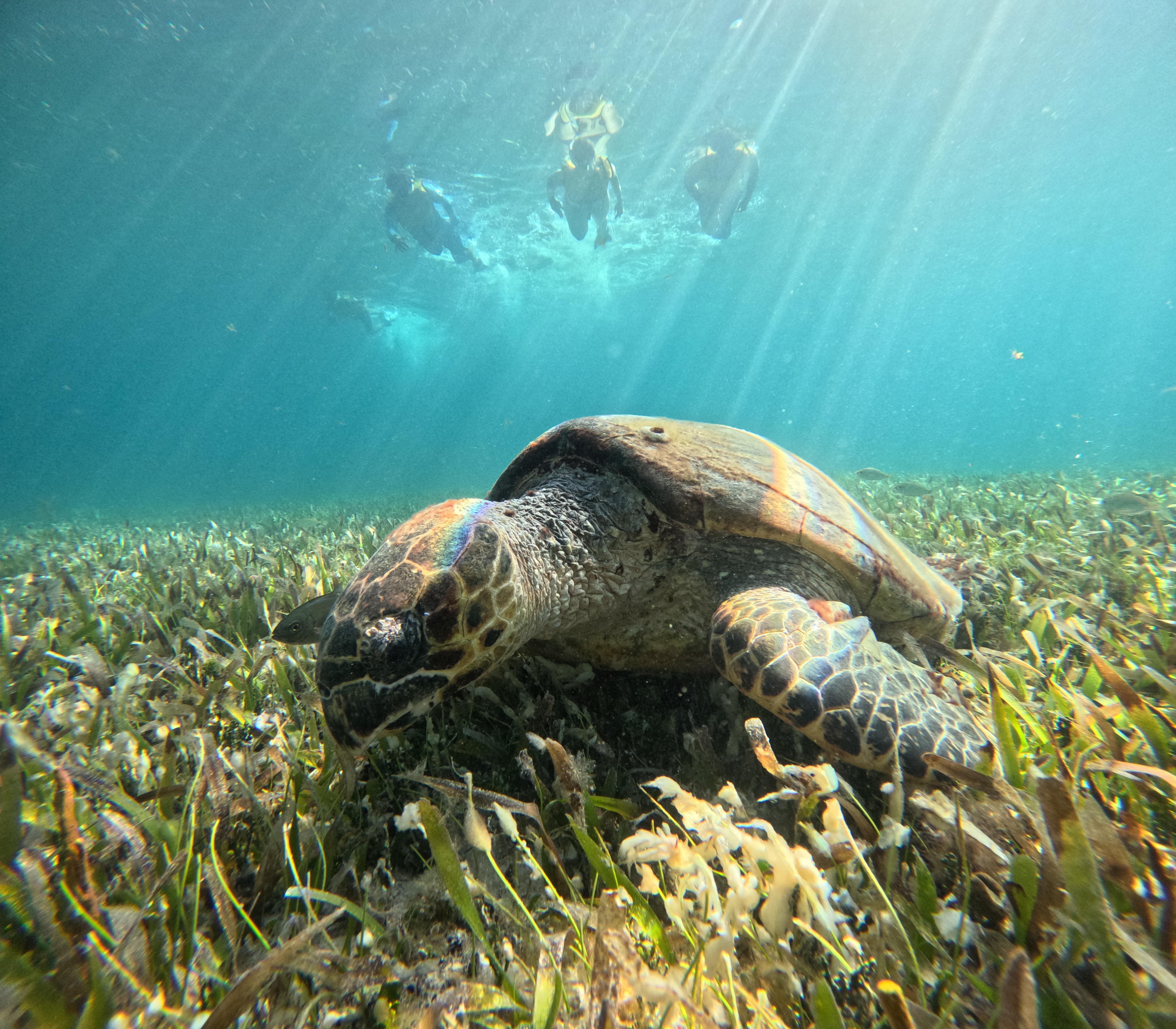
A Cancun snorkeling tour at MUSA the underwater museum pairs the sculpture gardens with adjacent natural reef systems, where visibility averages twenty to thirty meters during winter months and sea temperatures hold steady at 26°C year-round. Manchones Reef extends three kilometers along Isla Mujeres' southern shore, its shallow coral heads rising to within two meters of the surface and supporting hawksbill turtles, southern stingrays, and schools of blue tang. Morning departures intercept optimal light penetration before sediment stirs and thermoclines shift, illuminating Taylor's Silent Evolution installation—a 120-figure ring inspired by Mayan ceremonial circles.
The sculptures weather predictably: marine cement neutralizes to pH 8.2, matching seawater chemistry, while textured surfaces accelerate polyp settlement. Hurricane Wilma in 2005 and Delta in 2020 redistributed sand and toppled outlying pieces, but the main arrays remain intact, their encrustation now thick enough to obscure original features. Conservation staff monitor biannual coral health surveys and restrict daily visitor counts to prevent fin damage to fragile new growth spreading across the figures' shoulders and upturned palms.
Within eighteen months, fire coral, brain coral, and gorgonians had claimed the sculptures' limbs and torsos, transforming static art into living reef architecture.
Most operators require 24-hour notice for a full refund. The 15 USD Marine park and dock fee is typically non-refundable once paid at check-in.
The Cancun snorkeling tour at MUSA the Underwater Museum emerged from an urgent ecological problem. By 2006, Cancun's natural coral reefs faced collapse from overtourism, with hundreds of thousands of visitors annually damaging fragile marine ecosystems. Marine park director Jaime González Cano approached British sculptor Jason deCaires Taylor with a radical proposal: create an artificial reef that would draw divers away from natural formations while promoting coral regeneration. Taylor accepted, and in November 2009 the first sculptures descended into the waters off Punta Nizuc and Isla Mujeres. Taylor's vision extended beyond environmental engineering. His life-sized human figures—cast from real residents of a local fishing village—were constructed with marine-grade pH-neutral cement designed to encourage coral polyp colonization. The Silent Evolution installation, comprising 400 figures, became the museum's centerpiece in 2010. Each sculpture featured textured surfaces and hollow spaces engineered to maximize surface area for coral growth. Within months, algae films appeared. Within a year, fire coral and brain coral had begun their slow architectural takeover. MUSA officially opened in November 2010 with works from Taylor and five Mexican sculptors, including Roberto Díaz Abraham. The Manchones gallery, positioned in eight meters of water, allowed snorkelers access to the collection—a deliberate choice to broaden visitor reach beyond certified divers. Early results exceeded projections: surveys documented a thirty percent reduction in visits to nearby Manchones natural reef by 2012. The cancun snorkeling tour at musa the underwater museum tours became a model for underwater sculpture parks worldwide, spawning installations in the Bahamas, Lanzarote, and Australia. Today the collection spans over 500 sculptures across two distinct gallery sites, with ongoing monitoring confirming the dual mission: marine biomass at MUSA now exceeds that of some adjacent natural reefs, while visitor pressure on fragile ecosystems continues to decline.
Marine park director Jaime González Cano identifies reef degradation crisis and begins planning artificial reef solution.
Jason deCaires Taylor installs first sculptures at Punta Nizuc and Isla Mujeres using pH-neutral marine cement.
Silent Evolution installation of 400 life-cast figures completes, and MUSA officially opens with works from six artists.
Environmental surveys document thirty percent reduction in natural reef visits and successful coral colonization on sculptures.
MUSA expands collection beyond 500 pieces, becoming the world's largest underwater sculpture museum.
Ongoing monitoring confirms artificial reef biomass now rivals adjacent natural formations.
This iconic sculpture is one of the most recognizable figures for those on a cancun snorkeling tour at musa the underwater museum, positioned at a depth that allows for clear, top-down capture of the human-like forms. Position yourself directly above the installation to frame the statues against the sandy seabed.
Located in the deeper sections of the reef, this striking piece offers a dramatic perspective for underwater photography enthusiasts. You will need to dive down slightly to capture the silhouette of the statue with the sunlight filtering through the water surface.
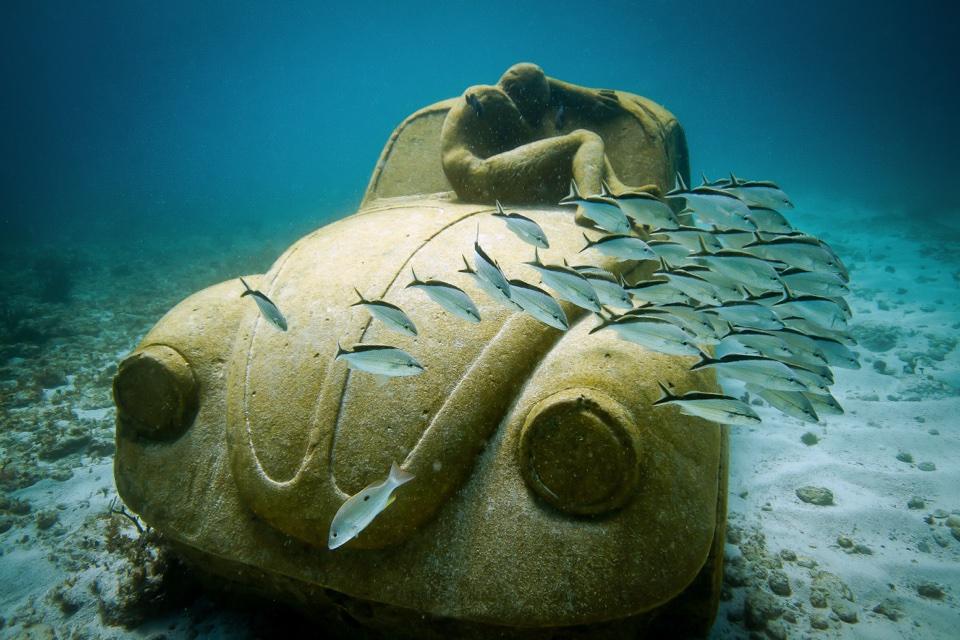
This life-sized concrete vehicle provides a unique architectural subject within the marine park, often covered in colorful coral growth. Capture a wide-angle shot from the side to include the surrounding sea life as you experience your cancun snorkeling tour at musa the underwater museum tours.
This cluster of figures creates an interesting geometric pattern on the ocean floor that works well for symmetrical composition. Ensure your camera is stabilized to avoid blur while documenting these landmarks in Cancun.
The surrounding coral formations offer a vibrant backdrop for any cancun snorkeling tour at musa the underwater museum tickets holders looking to capture marine biodiversity. Focus your lens on the interaction between schools of fish and the submerged art pieces.
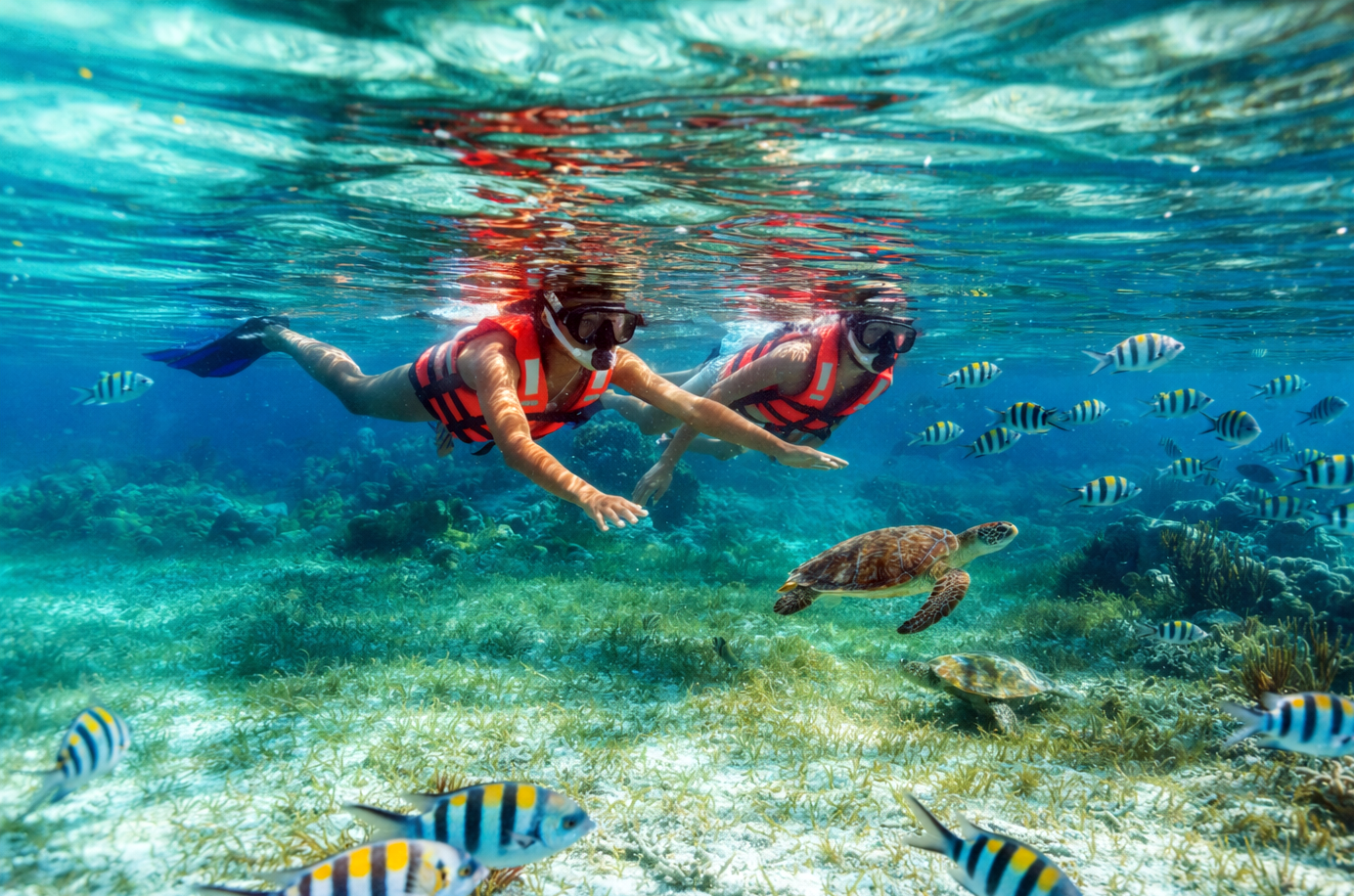
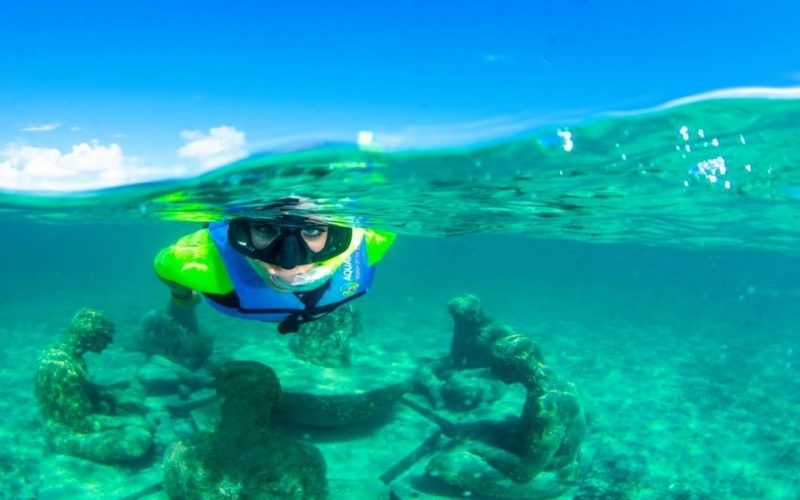
Exploring the reef sculptures on a cancun snorkeling tour at musa the underwater museum is a memorable way for families to observe marine life in a protected environment. These underwater galleries offer a unique perspective on coral conservation that appeals to older children and teenagers.
Strollers cannot be used on the boats or in the water, so plan to leave them at your hotel or secure them at the departure dock. Consider bringing a baby carrier for the time spent on the marina premises.
This experience is best suited for children aged 8 and older who are comfortable swimming in open water with snorkeling gear. Parents should ensure children have previous experience with a mask and fins before booking cancun snorkeling tour at musa the underwater museum tours.
There are no baby-change facilities available on the snorkeling vessels, so come prepared with all necessary supplies for your day trip. Restrooms are available at the marina location on Blvd. Kukulcan Km 15.3, Zona Hotelera, 77500 Cancún, Q.R., Mexico before you board the boat for your cancun snorkeling tour at musa the underwater museum tickets.
Expect a boat transit time to the site followed by active swimming in the ocean. Selecting a cancun snorkeling tour at musa the underwater museum tour during the best arrival window of 09:00–11:00 ensures calmer waters for younger swimmers.
Dining options directly at the dock are limited, making it best to plan a meal in the surrounding Hotel Zone after your cancun snorkeling tour at musa the underwater museum. Visitors often prefer nearby establishments to refuel after exploring the marine sculptures and coral reefs.
A popular spot for quick, hearty portions that satisfy post-dive hunger. It remains a favorite for those holding cancun snorkeling tour at musa the underwater museum tickets who want a relaxed vibe.;Natura
Everything you need to know for your journey
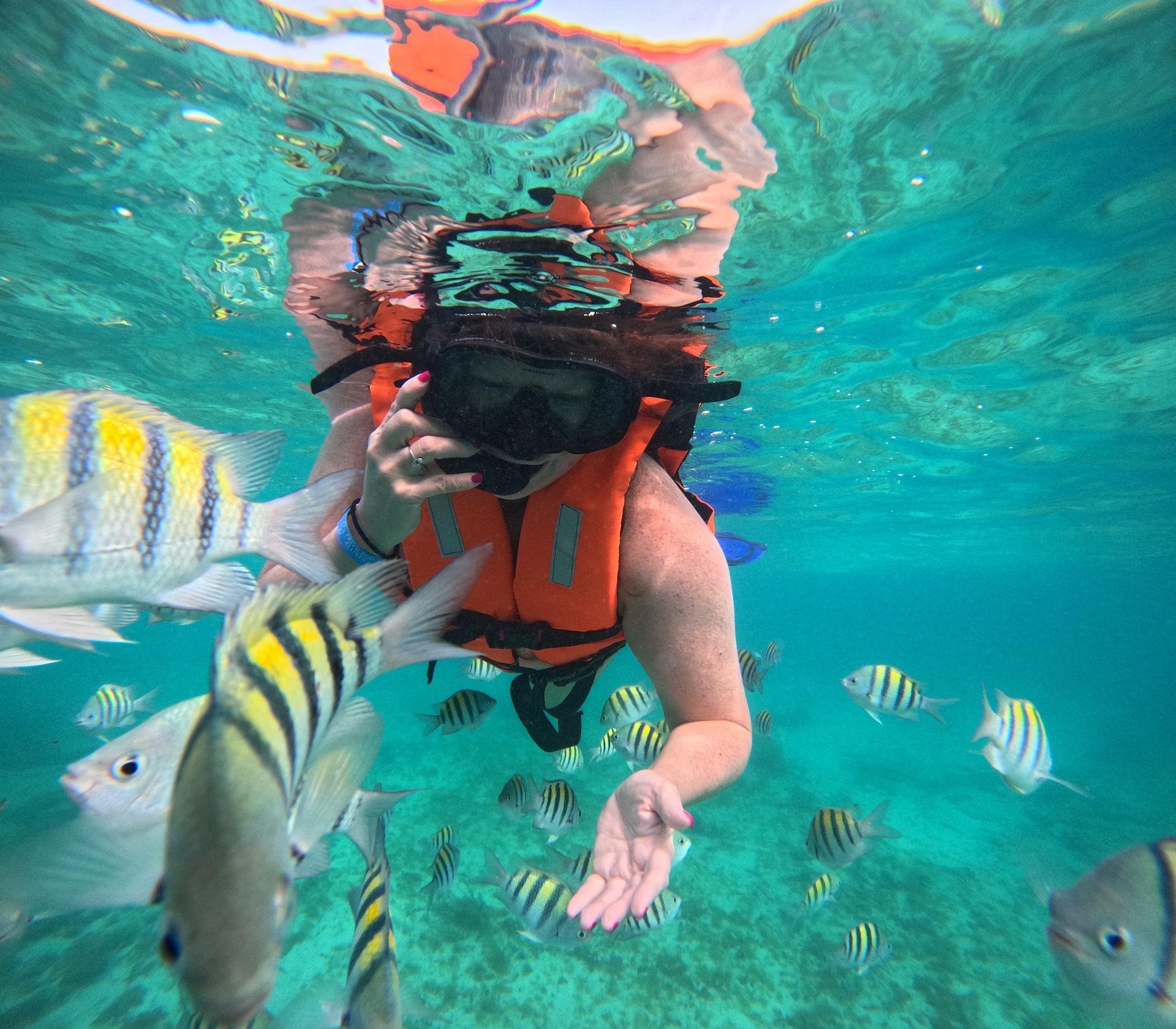
Yes, snorkeling at the MUSA is perfect for beginners who are comfortable in the water, as gear and guidance are provided.
No, you must visit the museum with a certified operator and guide as it is a protected marine area.
Wear a swimsuit and a sun shirt. Avoid non-biodegradable sunscreen to protect the reef.
Join thousands of happy travelers who have discovered this incredible experience
Book Your Experience Now