Quick answer
Cancun snorkeling sites feature 28 commonly observed reef fish families, with blue tang surgeonfish, stoplight parrotfish, French angelfish, and sergeant major damselfish appearing in over 80% of snorkel surveys. Morning sessions between 09:00 and 12:00 offer optimal visibility for fish observation, when water clarity reaches 15–25 meters and reef activity peaks before midday thermal currents reduce visibility.
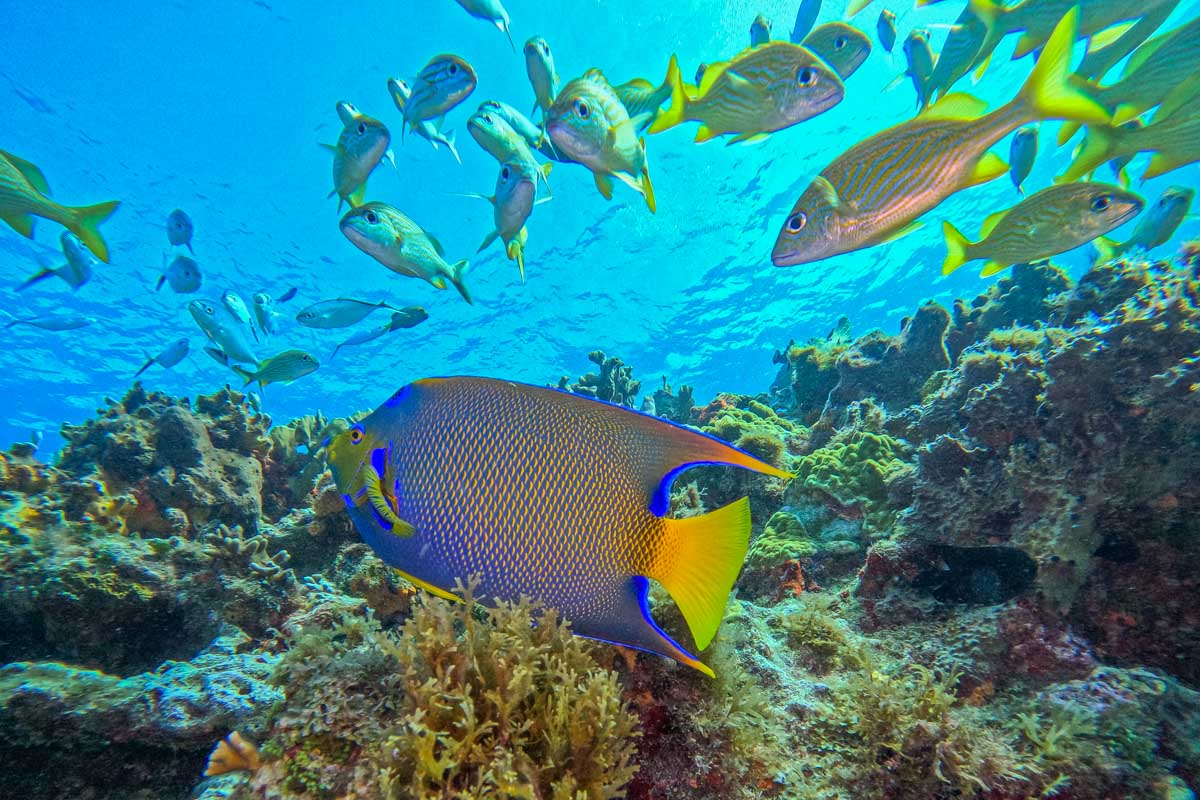
The Mesoamerican Barrier Reef extends 190 kilometers along Quintana Roo's coastline, creating the second-largest reef system in the world and a permanent habitat for Caribbean marine species. Cancun's accessible snorkeling zones concentrate around three ecological bands: shallow seagrass beds at 1–3 meters where juvenile fish shelter, mid-depth patch reefs at 4–8 meters where adult populations feed, and deeper coral formations at 10–15 meters frequented by pelagic visitors. Blue tang surgeonfish dominate the visual landscape—schools of 30 to 200 individuals graze on algae across hard coral surfaces throughout the day. Stoplight parrotfish, identifiable by their beak-like jaws and bicolor males, consume coral rock and excrete fine white sand that forms Cancun's beaches. French angelfish patrol reef edges in monogamous pairs, their yellow-trimmed black bodies visible from the surface in calm conditions. Sergeant major damselfish, striped in vertical black bands, aggressively defend nesting sites on rocky outcrops from April through August. Species distribution shifts by substrate and depth. Queen angelfish and rock beauties prefer elkhorn coral structures in the 5–10 meter range. Yellowtail snapper and bar jacks hunt in open water columns above the reef crest. Spotted drums and high-hat fish hide under ledges and require patient observation. Invasive lionfish, first documented in Cancun waters in 2009, now occupy crevices across all depths—divers remove hundreds annually through targeted culling programs. Seasonal migrations bring additional species into snorkeling range. Permit and tarpon juveniles enter shallow lagoons during summer months. Eagle rays glide over sandy channels between October and March. Whale sharks, the world's largest fish, aggregate 15 kilometers offshore from June through September, though snorkeling encounters occur only on dedicated pelagic tours outside the standard reef circuit. Water temperature remains between 26°C and 29°C year-round, sustaining consistent tropical fish populations without the seasonal die-offs common in temperate zones.
“Blue tang surgeonfish schools of 30 to 200 individuals graze on algae across hard coral surfaces throughout the day.”
Common Cancun Snorkeling Fish Species and Marine Life
The reefs surrounding Cancun and the Mesoamerican Barrier Reef system support a diverse range of marine species adapted to tropical coral environments. Observing these fish in their natural habitat provides insight into the complex behaviors and ecological roles they play within the reef ecosystem.
Parrotfish and coral erosion
Parrotfish possess specialized fused teeth that allow them to scrape algae off coral surfaces. They ingest coral skeleton and excrete fine white sand, contributing significantly to the composition of local beaches.
Queen Angelfish coloration
Recognizable by the distinctive blue-ringed black spot on its forehead, the Queen Angelfish is frequently spotted grazing on sponges. They are often found in pairs and exhibit territorial behavior toward others of their kind.
Sergeant Major Damselfish behavior
These fish are identified by five black vertical stripes on their yellow-white bodies. They are known for being bold around snorkelers and are often seen guarding nests of eggs laid on rocky surfaces.
Blue Tang schooling habits
Commonly seen in the Caribbean, Blue Tangs are recognized by their vibrant blue bodies and yellow caudal fins. Juveniles often seek shelter within coral crevices, while adults travel in groups to graze on algae.
Butterflyfish pair bonding
Butterflyfish typically have thin, disk-shaped bodies and elongated snouts designed for reaching into narrow reef crevices. They are frequently observed swimming in bonded pairs that remain together for long periods.
Grunt species sound production
Grunts are named for the sound they produce by grinding their pharyngeal teeth together. They are commonly found resting under coral ledges during the day to avoid predators before hunting at night.
Best Time to Observe Cancun Snorkeling Fish Species
The best arrival window is 09:00–12:00, which offers optimal visibility and calm water conditions for observing fish species. Visiting during these hours also helps avoid the peak midday heat and higher crowd volumes.
April to June
ModerateWarm, 28-30°C
Water clarity is high and whale sharks often arrive in local waters.
July to October
HighHumid, 29-32°C
Fish activity remains consistent despite the warmer water temperatures.
November to March
ModerateCooler, 24-27°C
Visibility is generally excellent with lower humidity levels.
Verdict: The best time to visit is Monday to Thursday between 09:00 and 12:00, specifically during the months of April or October.
Responsible Observation of Cancun Snorkeling Fish Species
Cancun's reefs host over 500 fish species within fragile ecosystems where a single touch can kill decades of coral growth. Responsible snorkeling protects marine life and preserves visibility for all visitors.
Do
- Maintain neutral buoyancy to avoid accidental reef contact
- Keep a minimum three-foot distance from all marine life
- Use reef-safe sunscreen applied 30 minutes before entering water
- Secure all equipment and accessories to prevent loss
- Report injured wildlife or coral damage to your guide
- Follow designated snorkel routes and stay within marked boundaries
Don't
- Touch, chase, or corner fish even for photographs
- Stand on or grab coral formations for stability
- Feed fish or bring food into the water
- Wear sunscreen containing oxybenzone or octinoxate
- Kick near the reef floor or use exaggerated fin strokes
- Collect shells, sand, or any marine organisms
Operating Hours for Accessing Cancun Snorkeling Areas
Access to the snorkeling areas within the Cancun Hotel Zone and Puerto Morelos follows a consistent weekly schedule.
| Monday | 08:00–18:00 | |
|---|---|---|
| Tuesday | 08:00–18:00 | |
| Wednesday | 08:00–18:00 | |
| Thursday | 08:00–18:00 | |
| Friday | 08:00–18:00 | |
| Saturday | 09:00–18:00 | |
| Sunday | 09:00–18:00 |
Entrance Fees and Conservation Costs for Cancun Snorkeling
Access to open water snorkeling locations in the Cancun Hotel Zone and Puerto Morelos is free of charge. Costs only apply when utilizing specific tours or entering protected marine parks where conservation fees are mandated.
Snorkeling in open waters costs 0 USD, while total expenses vary based on tour operator conservation fee policies.
Check availability
Common Questions About Cancun Snorkeling Fish Species
Everything you need to know about cancun snorkeling fish species